

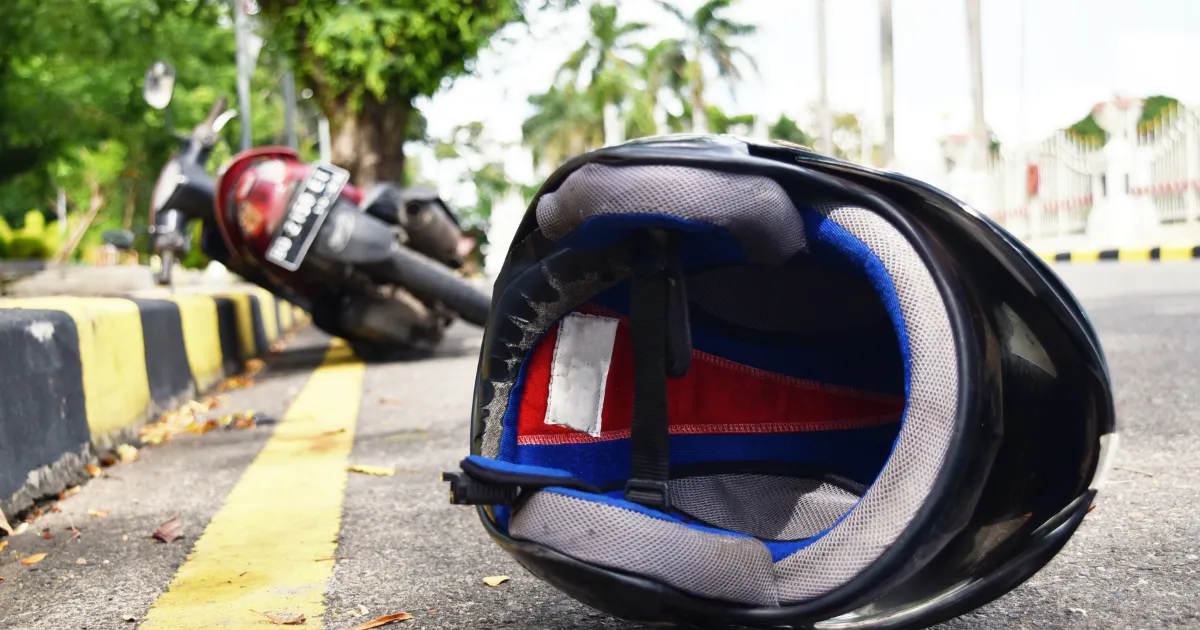
For motorcycle enthusiasts, nothing compares to the feeling of the wind against your face, the connection with nature, and the thrill of the open road. However, motorcyclists do not have the physical protection that an enclosed vehicle provides, including the steel frame, airbags, and seat belts. A crash that could cause minor injuries to the occupants of a motor vehicle can cause devastating injuries and fatalities to a motorcyclist. When determining who is responsible for a motorcycle accident in New Jersey, there are a number of circumstances that must be considered, including the actions of both parties in the moments leading up to the accident. If you are seriously injured in a car accident while riding a motorcycle in New Jersey, an experienced motorcycle accident lawyer will ensure that your legal rights are protected and will pursue the financial compensation you deserve.
Left-Turn Collisions: The Most Dangerous Scenario for Riders
The most dangerous situation for a motorcycle rider in New Jersey is when an oncoming car is making a left turn across their lane at an intersection. Unfortunately, it is not uncommon for motorists to turn left directly in the path of an oncoming motorcycle that has the right of way. According to the National Highway Traffic Safety Administration (NHTSA), close to 46 percent of two-vehicle fatal crashes involving a motorcycle and another vehicle happen when the other vehicle is turning left while the motorcycle is going straight. The following are some of the most common causes of left-turn motorcycle accidents:
- Drivers fail to see the motorcycle. A motorcycle may be directly in front of a turning driver, but its smaller size makes it easier to overlook.
- “Looked but didn’t see” situations. Drivers may look toward oncoming traffic but fail to recognize a motorcycle before beginning the turn.
- Motorcycle size affects distance judgment. A motorcycle can appear farther away than it actually is, causing a driver to believe there is enough time to turn.
- Motorcycles can be hidden by other vehicles. A motorcycle traveling behind or beside a car can disappear from view until it is too late.
- Left turns cross the motorcycle’s path. When a car turns left across an intersection, driveway, or roadway, the motorcycle often has very little time to avoid the vehicle.
- Speed can be misjudged. Drivers may underestimate how quickly an approaching motorcycle is closing the distance.
- Distracted driving increases the risk. Looking at a phone, adjusting the radio, talking to passengers, or simply being mentally distracted can cause a driver to miss an approaching motorcycle.
- Intersections create complicated visual conditions. Traffic signals, signs, pedestrians, parked vehicles, and multiple lanes can make it harder to spot a motorcycle.
- Motorcycles have a smaller visual profile. Even when a motorcycle has its headlights on, it may not attract the same attention as a larger vehicle.
- Drivers may be accustomed to looking for cars and trucks. Their visual habits can make motorcycles easier to overlook.
Lane Change and Blind-Spot Crashes
New Jersey is known for being one of the most densely populated states. The Garden State Parkway, the New Jersey Turnpike, Route 1, and Route 9 are infamous for heavy volume, high speeds, and frequent lane shifts. According to New Jersey’s N.J.S.A. 39:4-88(b), a vehicle cannot be moved from its lane until the driver has determined that the lane change can be made safely. Unfortunately, motorcycles are more likely to be involved in a collision because they are much smaller than passenger vehicles. The following are common causes of lane change or blind-spot accidents involving a motorcycle:
- The driver failed to check the side mirror or blind spot.
- The driver relied only on the rearview mirror.
- The driver moved into a lane occupied by a motorcycle.
- The driver failed to use a turn signal.
- The driver did not notice a motorcycle approaching from behind.
- The driver changed lanes suddenly or without enough space.
Dooring, Road Hazards, and Poor Road Conditions
Dooring is the act of opening a motor vehicle door directly in the path of an approaching motorcyclist, bicyclist, or other road user. If a motorcyclist crashes into the open door, this can cause serious injuries. Poor road conditions can also cause a motorcyclist to lose control of the motorcycle, or suddenly swerve to try to avoid a road hazard. The following are examples of unsafe road conditions that can cause motorcycle accidents:
- Surface and pavement issues:
– Potholes. Deep potholes in the road can cause tire blowouts or throw a rider off balance.
– Loose gravel and sand. This can reduce traction, particularly when making a turn.
– Uneven pavement and edge breaks. Drop-offs between lanes or construction zones can catch a motorcycle’s front wheel.
– Expansion and bridge joints. Metal or concrete gaps can destabilize a motorcycle, particularly when wet. - Slick, wet surfaces:
– Painted road lines. Fresh paint, crosswalk lines, and arrows become slippery when wet.
– Spilled fluids. Oil, antifreeze, and diesel fuel can create very slippery patches on the road.
– Wet leaves. As the leaves begin to fall, they create slippery conditions for motorcycles and cars when they are wet. - Debris and obstructions:
– Road debris. Rocks, branches, tire treads, and fallen cargo can cause motorcycle riders to make sudden maneuvers to avoid an accident.
– Railway crossings. Metal tracks can trap motorcycle wheels. In addition, they can become very slick when it rains.
– Animals. When deer and other animals dart across the road, causing motorcyclists to swerve to avoid hitting them, this can cause a serious accident.
How the Cause of the Crash Determines Liability
If you are seriously injured in a motorcycle accident in New Jersey, determining liability is crucial to recovering the damages you are entitled to receive. In order to prove fault, the following four basic facts must be proved:
- Duty of care. All motorists on New Jersey roads have a legal duty to operate their vehicles safely and follow traffic laws.
- Breach of duty. A driver or rider violated that duty by doing something unsafe (such as running a red light, speeding, or texting) or failing to do something necessary (such as checking blind spots before merging).
- Causation. That careless action directly caused the accident to happen.
- Damages. The crash resulted in actual harm, such as physical injuries, medical bills, lost wages, or property damage.
In most cases, the driver of the vehicle involved in a motorcycle accident is usually at fault in a New Jersey motorcycle accident. However, if the motorcyclist was distracted, speeding, under the influence of drugs or alcohol, weaving in and out of lanes recklessly, or engaging in any other unsafe behaviors, they may be liable for a resulting accident. Sometimes, both parties involved share a portion of the blame.
How Does New Jersey’s Liability Laws Impact Motorcycle Accident Claims?
New Jersey follows the modified comparative negligence rule, which states that if you are found to be 50 percent or less at fault, you may still recover damages, although the total award is reduced by the percentage of shared fault. If you are found to be 51 percent or more responsible, you are prohibited from recovering any damages from the other party involved. The following provides an example of the damages for which you would be entitled if you were injured in a motorcycle accident where you were partly at fault:
- You were hit by a car that failed to yield to the right of way while making a left turn at an intersection, but you were traveling 10 mph over the speed limit.
- Since you were speeding at the time of the crash, you were found to be 20 percent responsible for causing the accident.
- Your total damages equal $100,000. However, your total damages are reduced by 20 percent, or $20,000, leaving you with $80,000.
What Steps Should I Take After a Motorcycle Accident?
If you are physically able to do so, it is important that you take the following steps immediately following a motorcycle accident to ensure that your legal rights are protected and that you recover the damages to which you are entitled:
- Call 911. Request police and medical assistance immediately. An official police report provides unbiased evidence that can help your claim.
- Seek immediate medical attention. Even if your injuries do not appear to be life-threatening, it is crucial that you are examined by a medical professional. Some injuries, such as internal bleeding or concussions, are not immediately obvious.
- Collect evidence. Take photos and videos of your injuries, property damage, skid marks, and road conditions.
- Exchange information. Share insurance details with all involved drivers and gather names and phone numbers of any eyewitnesses.
- Do not apologize. Statements like this can be misinterpreted as admitting blame.
- Notify your insurance company. Only provide the basic facts about the accident and avoid giving a recorded statement.
- Contact a motorcycle lawyer who will assist you with the claims process and negotiate the best possible settlement outcome.
New Jersey Motorcycle Accident Lawyers at Kitrick & Wells, LLC, Represent Victims of Motorcycle Accidents
If you were seriously injured in a motorcycle accident, do not hesitate to contact the New Jersey motorcycle accident lawyers at Kitrick & Wells, LLC. We will determine who is responsible for causing the accident, ensure that your legal rights are protected, and pursue the maximum financial compensation you deserve. For a free personal injury consultation, call us at 732-920-8383 or contact us online. Located in Manasquan and Brick, New Jersey, we serve clients throughout the state.