
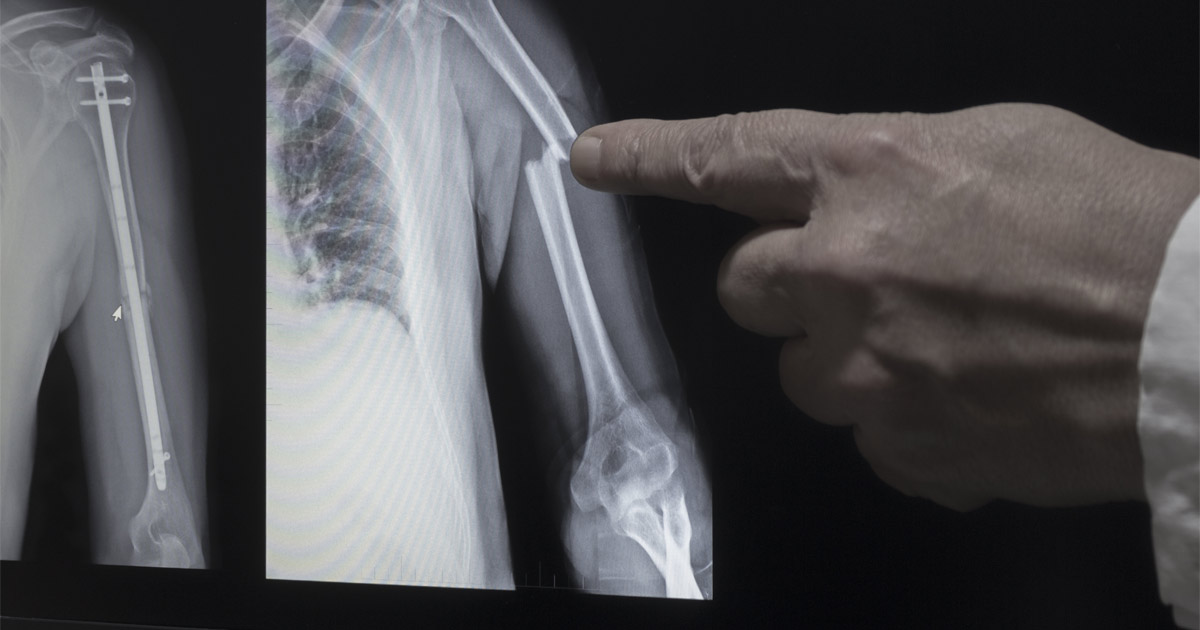
Car accidents subject the human body to tremendous force in seconds. For example, when vehicles collide, occupants experience rapid deceleration, sometimes causing bones to bend, twist, or compress beyond capacity. Even minor collisions generate enough force to break bones, while high-speed crashes often result in multiple fractures requiring extensive medical treatment. The fracture type depends on collision speed, impact point, seat belt use, and body position at impact.
What Is a Simple Fracture?
A “simple fracture,” also called a “closed fracture,” occurs when bone breaks without piercing the skin. The broken bone remains contained within the body, reducing infection risk compared to open fractures. Simple fractures require immediate medical attention, as improper healing leads to chronic pain and limited mobility. Treatment involves immobilization through casting or splinting.
What Is a Compound Fracture?
“Compound fractures,” known medically as “open fractures,” happen when broken bone fragments puncture through skin or when external objects penetrate and break bone. These injuries carry a significant infection risk since broken bones become exposed to bacteria and contaminants. Compound fractures require emergency medical intervention, often including surgical wound cleaning, bone realignment, and antibiotic treatment.
What Is a Comminuted Fracture?
“Comminuted fractures” involve bones shattering into three or more pieces, typically from high-impact collisions. Bone fragments may scatter, making realignment challenging during treatment. Surgeons use pins, plates, or screws to hold bone pieces in the proper position during comminuted fracture healing. Recovery requires extended rehabilitation and may result in permanent mobility limitations.
What Is a Greenstick Fracture?
“Greenstick fractures” occur almost exclusively in children, whose bones are more flexible than adult bones. The bone bends and cracks on one side without breaking completely through, similar to how a green tree branch breaks. Car accidents involving child passengers cause these partial breaks, particularly in arm and leg bones. Treatment involves casting to prevent partial breaks from becoming complete.
What Is a Transverse Fracture?
“Transverse fractures” create a horizontal break line perpendicular to the bone length. Direct impact, such as when a knee strikes the dashboard during a collision, commonly causes this fracture pattern. The clean break line often allows straightforward treatment and alignment. Doctors typically immobilize transverse fractures with casts or braces, though severe cases may require surgical intervention with internal fixation devices.
What Is an Oblique Fracture?
“Oblique fractures” feature an angled break across the bone, creating a slanted fracture line. Twisting forces during accidents, such as when the body rotates upon impact while a limb remains fixed, frequently cause these fractures. The angled break makes bones more prone to displacement during healing; treatment approaches vary based on angle severity, ranging from casting for stable fractures to surgical fixation for unstable breaks.
What Is a Spiral Fracture?
“Spiral fractures” wind around the bone shaft like a corkscrew, resulting from severe twisting force applied to a limb. Rollover accidents and collisions, causing body rotation while extremities remain trapped, often produce spiral fractures. These breaks prove particularly difficult to treat due to their curved pattern and tendency toward displacement. Surgical intervention with rods or screws becomes necessary in most cases to maintain alignment, followed by months of physical therapy.
What Is a Compression Fracture?
“Compression fractures” occur when bones collapse or crush under extreme pressure, most commonly affecting vertebrae in the spine. Rear-end collisions and rollover accidents force the spine to compress suddenly, causing vertebrae to crack or collapse. These fractures may result in height loss, chronic back pain, and nerve damage if bone fragments press against the spinal cord. Treatment ranges from pain management and bracing for minor compression to surgical vertebroplasty or kyphoplasty.
Our Experienced Atlantic County Car Accident Lawyers at Kitrick, McWeeney & Wells, LLC Can Fight for the Compensation You Deserve
If you or a loved one was seriously injured in a motor vehicle crash, contact our Atlantic County car accident lawyers at Kitrick, McWeeney & Wells, LLC. For a free consultation, call today at 732-920-8383 or contact us online. With office locations in Manasquan and Brick, New Jersey, we proudly serve clients throughout the state.